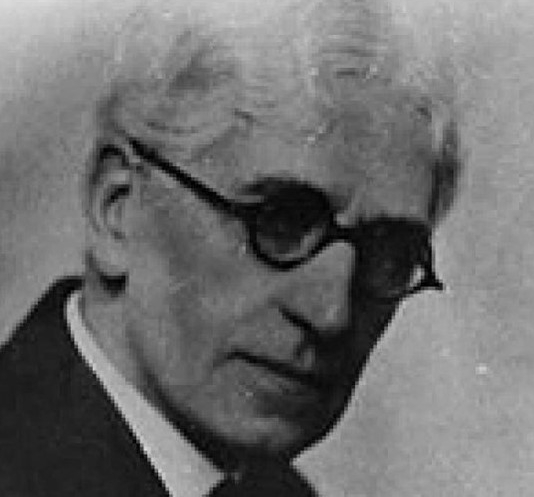
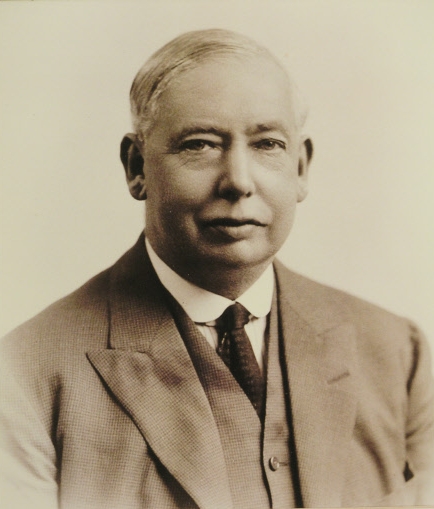
Alfred Pott was vicar of St Helen’s, Abingdon, from 1867 to 1875. It was one of six parishes he served in during his fifty-two years as a parish priest. He was appointed Archdeacon of Berkshire in 1869 which made him the assistant to the bishop in the Berkshire parishes of the Oxford diocese, a position he held until he finally retired from active ministry in 1902 at the age of eighty. In his retirement, Alfred Pott wrote Memoirs of my life, 1822-1903 as a typescript intended solely for his children, but a surviving copy came to light a century after it was written and has provided much of the material for these articles.
Pott suffered from periodic bouts of ill health all his life and a constant theme in his Memoirs is his doubt about having the strength to undertake the new positions that were offered to him. Despite these problems he survived to his late eighties and his contemporaries much appreciated his wise counsel and his ability to get things done.
Alfred Pott’s parents were Charles Pott, a merchant, and later the treasurer of the Foundling Hospital in London, and Anna, née Cox, daughter of Samuel Compton Cox, a leading lawyer. Alfred was educated at Eton and Oxford, ordained as a priest in 1846, and, after a short period as a deacon at Swallowfield, served at Cuddesdon, near Oxford, from 1847 to 1857 as curate and then vicar. A protégé of Bishop Samuel Wilberforce, he also served for many years as one of his examining chaplains, a post he continued to hold even after Wilberforce became bishop of Winchester.
In 1852 Wilberforce gave him the task of setting up a theological college on land opposite the bishop’s palace in Cuddesdon, and then appointed him as the first principal. The college aroused some initial opposition to what were described as its ‘Romanising practices’, but Pott and his immediate successor established its place in theological education.
In 1855, while at Cuddesdon, Pott married Emily Harriet (1835-1903), daughter of Joseph Gibbs, vicar of Clifton Hampden. During their long married life they had five daughters and five sons. Joseph was a younger brother of William Gibbs who managed the very profitable family guano business and was also a notable religious philanthropist. Gibbs family money was significant in Pott’s building projects, particularly in Abingdon.
After resigning from Cuddesdon due to one of his periodic bouts of ill health, Pott resumed his ministry after a break of a few months and, in 1858, moved to East Hendred, near Wantage, where the local squire was a Roman Catholic. He began by building church schools and then asked the well-known church architect Henry Woodyer to undertake the restoration of the parish church.
Pott succeeded the long-serving Nathaniel Dodson as vicar of Abingdon in 1867. He was hesitant – there was no vicarage and “the loss of income was not inconsiderable” – but was “strongly urged” by Bishop Wilberforce to accept, perhaps suggesting that Wilberforce, knowing that Pott had some private means, wanted him to serve in parishes which it would be difficult to get other good candidates to accept. He moved to Abingdon although the new vicarage had still to be built and immediately set about improving the facilities in the town. His priority was the construction of proper church schools, and boys’, girls’ and infants’ schools were built in 1868-9.
Pott then turned his attention to the restoration of St Helen’s Church. He was daunted by the prospect of “a work of great cost and difficulty” but asked Henry Woodyer to draw up plans. Woodyer’s style of architecture with its emphasis on the chancel fitted Pott’s high church views, and their plans went far beyond the immediately necessary repairs and stabilisation of the structure.
St Helen’s has an unusual layout for a church. Its site constrained it to growing by adding aisles and, from the sixteenth century, the chancel and nave had been flanked by two aisles on each side, all the full length of the church and with only small differences in the heights of the five pitched roofs. Woodyer transformed the central chancel and nave aisle by raising its roof to be significantly higher than the roofs of the neighbouring four aisles, and inserting a new east window. Pott and his family, particularly William Gibbs, paid the entire cost of the new chancel aisle.
But despite the large amount of work on the church from 1869 to 1873 the tower was untouched even though it was in too unstable a state to allow the bells to be rung. We can, perhaps, surmise that Pott knew that funds to stabilise the tower would eventually have to be found by the parish and that he also knew it was only Gibbs money and not local donations that would pay for the high church chancel he so much wanted for St Helen’s. It was a further thirteen years before the work on the tower could be completed. The full restoration of St Helen’s was finally celebrated in 1886.
In addition to organising the building of the junior schools and the major reordering of St Helen’s, Pott also had a great influence on the life of the church and the grammar school. He reorganised church services, used the surplice for preaching, a high church practice, and replaced pew rents by voluntary weekly offerings. He served as chairman of the governors of Abingdon School from his appointment as vicar in 1869 until 1900, long after he had left Abingdon. The local historian James Townsend, writing some forty years later, comments that he won general respect through the changes he accomplished and “by the tact and vigour of his character”.
Pott resigned his Abingdon living in 1874 suffering again from one of his recurrent bouts of ill health. In 1875 he moved to Clifton Hampden as vicar and then, in 1882, accepted his last incumbency and moved to Sonning, near Reading, where he stayed for seventeen years. Both these parishes were already provided with a refurbished church, a vicarage, and a school, allowing Pott to concentrate on his pastoral work and his responsibilities as archdeacon.
Pott resigned as a parish priest in 1899 and as archdeacon in 1902, and retired to Windlesham in Surrey, where died in 1908. He was very highly regarded by his contemporaries who valued his “practical wisdom, great powers of organisation, judicious advice, and unobtrusive readiness to help”.
© AAAHS and contributors 2023 & 2024